Why Clothing Categories Exist
Clothing categories are often taken for granted, yet they serve a clear organizational purpose. Grouping garments into categories simplifies selection, storage, and discussion. Without categories, managing a wardrobe would require significantly more effort and attention.
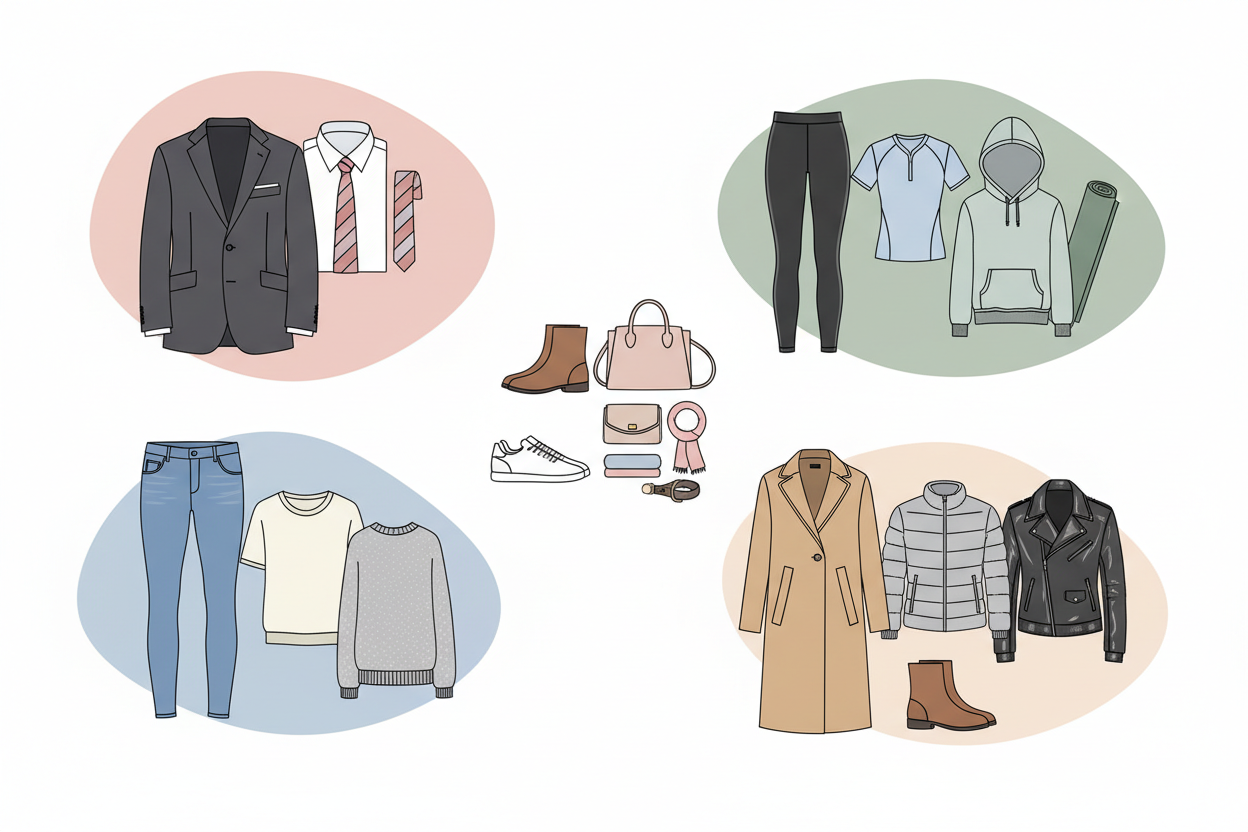
Categories usually form around function. Items designed for similar uses are grouped together, making them easier to find and rotate. This reduces decision time and supports consistency in daily dressing. Over time, these groupings become intuitive, reinforced through repeated use.
Social context also contributes to categorization. Certain garments are associated with specific settings, such as work, rest, or formal occasions. These associations help individuals navigate expectations without needing explicit guidance. Categories act as shared references that support coordination within communities.
Retail and manufacturing systems further reinforce clothing categories. Standardized groupings allow for efficient production, labeling, and distribution. While these systems are commercial in nature, they align with existing habits rather than creating them entirely.
Categories also assist with maintenance. Washing, storing, and repairing garments becomes more manageable when similar items are treated together. This reduces errors and extends usability through consistent handling.
Over time, categories evolve. Changes in lifestyle, work environments, and cultural norms introduce new groupings or adjust existing ones. Despite these shifts, the underlying purpose remains the same: to create order within complexity.
Clothing categories persist because they reflect how people interact with garments in daily life. They provide structure without restriction, allowing individuals to adapt systems to their own needs while maintaining a shared framework.